-
Home
-
Products & Services
-
Dissolvable Plugs
 Fast Drill Plugs
Integrated Completion Systems
Fast Drill Plugs
Integrated Completion Systems
-
Intelligent Rotating Control Device
Intelligent Well Control
-
Intelligent Fluids Monitoring
Real-Time Wellbore Monitoring & Strengthening
Unconventional Completion & Dissolvable Technology
Featured HighlightsIntelligent Pressure Control Technology
Featured HighlightsIntelligent Fluids Monitoring Technology
Featured Highlights -
-
Vertechs Share
-
News
-
QHSE
-
About Us
-
Contact Us





Loss Circulation in Drilling: Modern Solutions to Reduce NPT and Costs
2026-04-10
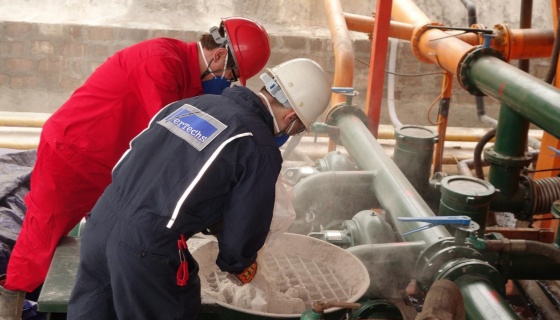
Loss circulation in drilling is currently one of the most challenging and costly issues in the energy industry in the world. This phenomenon is defined as the loss of all or part of the drilling fluid in the formation, not only is wasteful of expensive mud, but also puts the wellbore at risk of well control accidents, as well as adding to non productive time. In an age where the most stringent drilling margins in history may pose a significant risk to operations, predictability, identification, and prevention of such losses are a crucial distinction between successful operations.
The Circulation of the Loss Challenge Anatomy
In order to deal with the loss circulation in drilling, a person must have the knowledge of the geological environments in which it is experienced. These losses normally occur in three different types of formation, high permeability sands, natural or induced fractures, and vugular or cavernous. In permeable formations, the fluid oozes in the rock as water in a sponge. The fluid in fractured areas exudes through cracks which could have been formed by nature or due to overflows of equivalent circulating density. Vugular zones are probably the most difficult because they are massive cavities that are able to ingest whole mud systems within a few minutes.
The main effect of such losses is the decrease in the hydrostatic head. The pressure against the formation becomes low when the column of fluid in the wellbore collapses. When this pressure falls below that of the pore pressure of another zone, it may cause a kick which results in a tricky and perilous condition whereby the operator is both losing fluid and gaining undesirable formation gas or oil.
History of the Lost Circulation Materials
The industry has long since outgrown the old style of merely pumping in a hole the so-called nut plugs or shredded cedar. Multi-modal particle size distributions are now developed in modern lost circulation materials or LCM. Such blends are created in order to form a bridge at the surface of the fracture, then smaller particles fill the voids between the larger ones and finally a seal layer of fine particles. This bridging system is necessary to prevent seepage and loss of more costly synthetic based muds.
The creation of smart fibers and shape memory polymers is one of the most important innovations in the year 2026. Such materials may be incorporated in the drilling fluid and they will be dormant until they come across a certain temperature or pressure drop at the loss zone. When triggered, they cross-link or swell to create a hard, long-lasting plug that is able to resist high-differential pressures. This accuracy enables the operators to close fractures without necessarily ruining the productivity of the reservoir.
Wellbore Strengthening and the Stress Cage Theory
The philosophy of modern drilling has changed from reactionary mitigation to preventive measures by strengthening the wellbore. In this method, one adds special particles in the mud purposely in order to close micro-fractures that occur. The internal stress of the wellbore in fact raises the hoop stress of the rock by closing the end of a fracture, and stopping its extension.
This effect, which is referred to as the stress cage, enables engineers to drill through small pressure windows with the disparity between pore pressure and fracture gradient being small. This will help the operators to be able to apply heavier weights of the mud as the wellbore will be stronger and will not cause any section to be broken in the deep parts. This is a drastic way of reducing NPT in complex deepwater projects whereby drilling traditional methods would have necessitated several extra casing strings.
The Managed Pressure Drilling Role
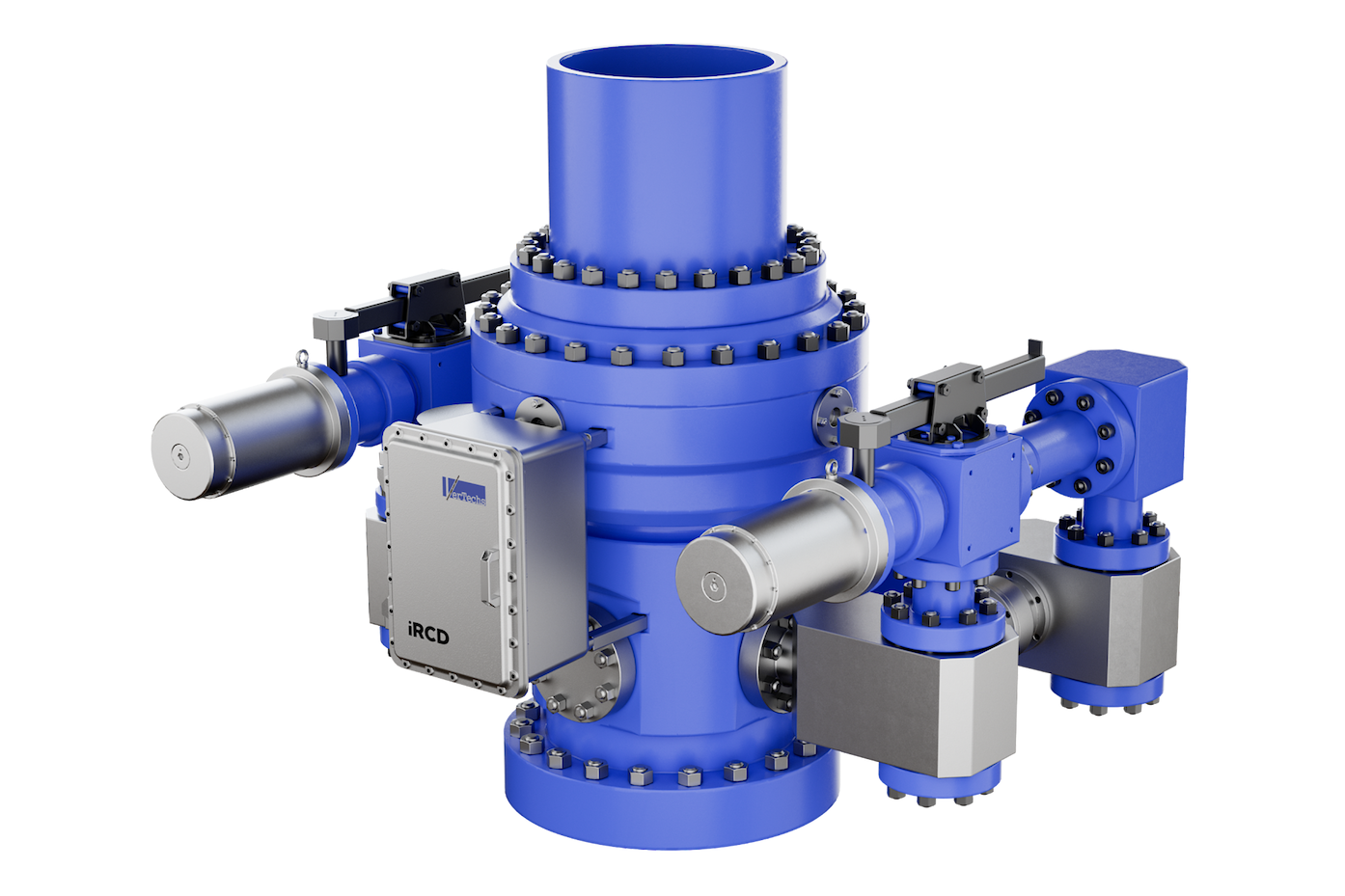
Such technology as Managed Pressure Drilling or MPD has become a familiar weapon in the struggle with the loss circulation in drilling. MPD makes it possible to manipulate the annular pressure profile with a high level of accuracy by taking advantage of a closed-loop system and a rotating control device. Engineers do not need to depend on the mud weight only and can use surface back pressure to remain precisely within the safe drilling range.
In case of a loss in the MPD operations the system realizes this almost immediately. The automated chokes may be regulated to the lowest pressure needed to maintain the bottom hole and prevent the loss without necessarily having a dedicated LCM pill. This degree of control is critical towards the protection of sensitive reservoirs as well as reducing the amount of fluid that will be lost to the formation which directly affects the overall project economics.
Online Twins and Analytic Foretelling
The use of data science in the drilling process has given the operation an extra protection. With the help of digital twins of the wellbore, the engineers would be in a position to conduct a simulation so as to determine the most likely location of losses depending on historical offset data and the real-time drilling parameters. Machine learning algorithms are provided that study the trends of standpipe pressure and flow rates to give an early warning of a weak formation. This enables the crew to treat the mud system in advance using the relevant LCM before even the bit enters the problematic area. The shift of reactive, as opposed to predictive, data-driven strategies is the feature of modern drilling excellence in 2026.
About Vertechs
At Vertechs, we commit our effort towards offering sophisticated wellbore integrity and fluid management solutions. Special drilling equipment and developed chemical systems are our areas of specialization that enable us to assist our partners in reducing NPT and maximizing efficiency.
Frequently Asked Questions
1. What is the most prevalent cause of loss circulation?
The most frequent ones are drilling into drastically permeable formations or beyond the fracture gradient of high mud weights.
2. How does LCM work?
Lost circulation materials seal the cracks or fissures in a formation or fracture forming a physical barrier that does not allow fluid to escape into the rock.
3. Will loss circulation result in a blow out?
Yes, when the level of the fluid decreases greatly, the subsequent loss of the hydrostatic pressure may enable the formation of fluids to be drawn into the well resulting in a kick.
4. Why is dissolvable LCM a better idea?
Dissolvable LCM offers a temporary seal, which could be taken away later, by the wellbore fluids, so that the reservoir is productive at the extraction phase.
5. What is the cost of NPT of losses to the industry?
It has been estimated that loss circulation and the non productive time that is involved cost the oil and gas industry of the world billions of dollars of lost rig time and fluid costs.
Read Our One More Blog(1): Reducing Completion Time and Costs: Vertechs' Innovative Plug and Perf Technologies
Read Our One More Blog(2): Advancing Drilling Efficiency: The Role of Fluid Rheology in Modern Wellbore Technologies