-
Home
-
Products & Services
-
Dissolvable Plugs
 Fast Drill Plugs
Integrated Completion Systems
Fast Drill Plugs
Integrated Completion Systems
-
Intelligent Rotating Control Device
Intelligent Well Control
-
Intelligent Fluids Monitoring
Real-Time Wellbore Monitoring & Strengthening
Unconventional Completion & Dissolvable Technology
Featured HighlightsIntelligent Pressure Control Technology
Featured HighlightsIntelligent Fluids Monitoring Technology
Featured Highlights -
-
Vertechs Share
-
News
-
QHSE
-
About Us
-
Contact Us







Mastering Well Control: A Comprehensive Guide for Safe and Efficient Operations
2026-02-26
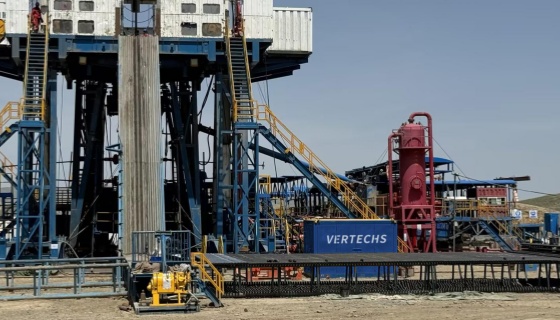
The intricacy of the drilling processes has taken an all new turn in the current energy scenario in 2026. With the operators exploring further and in deep and high pressure and high temperature reservoirs, the stakes have never been higher where safety is concerned. Well Control is at the focus of this operational integrity. It is the crucial act of keeping the pressures in the wellbore under control to avoid the uncontrolled flow of the formation fluids which is often referred to as a blowout. It takes a combination of intense physics, mechanical stability and split-second decisional aptitude to master this discipline.
Primary Well Control Foundation
The primary well control line of defense is the first and the most crucial line of defense instituted in any drilling program. It is only possible when the natural pressure of the reservoir is overridden by the hydrostatic pressure of the drilling fluid, or mud, that the natural pressure of the reservoir is neutralized. In order to have a stable well, the formation pressure should be slightly greater than the hydrostatic pressure but less than the fracture gradient of the rock. Such a fine balance is controlled by mud engineers that are constantly addressing the density and rheology of the fluid.
A decrease in the hydrostatic pressure below the formation pressure results in a kick or influx of gas, oil or water into the wellbore. Primary control is a dynamic process; with the drill bit passing through the various geological layers, the weight of the mud should be changed in real time to consider the varied pressure regions. This process has become finer in 2026 with automated fluid management systems, but the basic principle of the mechanism has not changed: the fluid column is the wall that ensures the well is held in place.
Secondary Well Control and Mechanical Barriers
In case primary well control fails and influx flows in the wellbore, secondary well control measures should be launched. This entails the mechanical hardware use where the main hardware used is the Blowout Preventer (BOP) stack. The BOP is an enormous compilation of qualified valves, created to close the wellbore and to control the pressure.
Secondary control is not merely the possession of the hardware, it is the process of the shut in. The crew should then close the annular preventer or pipe rams to prevent the flow when a kick is detected. When the well is closed, this pressure is held and the crew is able to get the precise weight of the required kill mud in order to restore the primary control. The most important aspect of these mechanical barriers is their reliability that they undergo frequent pressure testing and fixing to make sure that they work flawlessly when under extreme pressure.
New Kick Detection and Real-Time Monitoring
The difference between a minor hiccup in the operation and an event can be a catastrophe on its own. The contemporary rigs have a packet of sensors to give a digital heartbeat of the well. The most prevalent signs of a kick are sudden rise of the penetration rate, rise of flow out to flow in, and a rise in the volume of the pit.
In the modern world, machine learning algorithms will process such streams of data to detect anomalies at a speed that a human operator can not. These systems offer early signals of an upcoming kick, by removing the noise of the normal motions of the rig. This will enable the driller to check the flow and act before the amount of influx becomes dangerous to control considerably, which lowers the pressure which the casing and the BOP are supposed to withstand.
Executing Well Kill Methods
After securely containing a kick, one goes to work in the process of killing the well. This entails pumping of the influx out of the wellbore and at the same time pumping the heavy kill mud in place of the old mud. The industry is dominated by two main techniques with a decision between the two being determined by the rig conditions and the nature of the influx.
Wait and Weight technique is very common due to its efficiency and the fact that minimal effects are imposed on the structural integrity of the wellbore but the crew must wait until the kill mud becomes fully weighted before commencing pumps. On the other hand, the Driller Method enables the instant removal of the influx, which is essential when the gas is migrating or in the event of the risk of the pipe becoming stuck.
Human Factor Role and Training
Along with the high-tech that is going to be in place in 2026, the human factor is the most crucial aspect of well control. It is competency that is acquired as a result of continuous training and simulation. Well control certification makes sure that each member of the crew, whether it is the floorhands or the company representative, appreciates their respective positions during a crisis.
In modern simulators, the high-fidelity virtual reality is used to put crews in situations that are highly stressful to train them on shut-in procedures and kill-sheet calculations in a safe setting. It is this muscle memory that causes one not to panic when faced with a real event. The final safety net to the industry is a culture of safety whereby any member of the crew can halt the work should he or she feel there is a problem in the well control.
About Vertechs
In Vertechs, we are committed to the improvement of wellbore integrity with the help of our innovative downhole solutions and technical experience. We offer the means and possibilities to enable our partners to cope with complicated forces with a hundred percent certainty. We are devoted to safety and efficiency which motivates us to provide the utmost quality of excellence in all projects that we have.
Frequently Asked Questions
1. What does the kick mean in well control?
When the hydrostatic pressure is below the reservoir pressure, an unwanted influx of formation fluids into the wellbore is experienced and this is referred to as a kick.
2. How often is the BOP tested?
BOP stacks are usually tested on the daily basis used in the routine of the function and 14-21 days on the pressure test basis, as it is specified in local regulations and company policy.
3. Is it possible to avoid a blowout when a kick has taken place?
Yes, kick can be safely contained and pumped out by adherence to the correct secondary well control procedures and shut-in methods.
4. What is the distinction between the hydrostatic and pore pressure?
Hydrostatic pressure is the weight of the fluid column in the well whereas the pore pressure is the pressure of the fluids that are trapped in the rock.
5. Why is the migration of gases dangerous?
Compressible gas rises and expands thus causing a rapid decrease in hydrostatic pressure resulting in sudden and violent rise in surface pressure.
Read Our One More Blog(1): What Are Drilling Fluids, Types, Composition And Uses?
Read Our One More Blog(2): Understanding the Role of Fluid Rheology in Cementing for Oil and Gas