-
Home
-
Products & Services
-
Dissolvable Plugs
 Fast Drill Plugs
Integrated Completion Systems
Fast Drill Plugs
Integrated Completion Systems
-
Intelligent Rotating Control Device
Intelligent Well Control
-
Intelligent Fluids Monitoring
Real-Time Wellbore Monitoring & Strengthening
Unconventional Completion & Dissolvable Technology
Featured HighlightsIntelligent Pressure Control Technology
Featured HighlightsIntelligent Fluids Monitoring Technology
Featured Highlights -
-
Vertechs Share
-
News
-
QHSE
-
About Us
-
Contact Us






The Fluid Rheology in Advanced Manufacturing
2026-02-27
In the precision world of 2026, advanced manufacturing no longer involves simple assembly of materials but atomic and molecular manipulation of the same. The core of this revolution is Fluid Rheology, which is the science of the flow and deformation of materials under forces exerted on them. It is no longer an academic game of figuring out the flow characteristics of complex fluids be it the extrusion of a high-performance polymer in aerospace 3D printing or the thin film application of conductive inks in flexible electronics, it is now a manufacturing requirement.
The Pulse of Additive Manufacturing
In additive manufacturing and 3D printing, the ability of a material to move between solid and fluid states is the determinant of the success of a build. Fluid Rheology determines the way a substance acts in case it is pressed through a small opening and the way it preserves its shape after being laid down. The vast majority of developed polymers and bio-inks of bioprinting display non-Newtonian behaviour, i.e. shear-thinning.
In case of the material contained in the print head, high shear rates decrease the viscosity of the material, and thus it flows with ease. Nevertheless, the shear rate decreases as soon as it leaves the nozzle, and the material should quickly acquire its viscosity to avoid collapsing of the structure. This is a vital rheological parameter. When the healing is not fast enough, the layers will droop and when it is too fast, the layers will not cure well resulting in structural flaws in the completed component.
Accuracy in Microfluidics and Printed Electronics
Electronics has adopted a move towards printed components with the sensors, antennas and circuits being printed on surfaces using special inks. Such inks frequently contain silver or copper nanoparticles making it a complex suspension. These inks have their Fluid Rheology which defines the resolution of the printed traces.
A liquid that is not quite thick will flow through the substrate creating short circuits, whereas a liquid that is too thick will have a clogging effect on the microscopic apertures of the printer. The Herschel-Bulkley model is a model of such fluids that are employed by manufacturers to make sure they possess sufficiently low yield stress to remain precisely at their position as they are put.
High-Performance Coats Optimization
Coatings are used in the automotive finish, and the anti-corrosive layer in offshore platforms are a masterpiece in rheological control. The coating should be thin enough to be sprayed or rolled onto a surface but it should gain enough internal strength to overcome the effect of gravity after being applied. This balance prevents the sagging on the verticals and permits the leveling to remove the brush lines or the orange peels textures.
Modern production makes use of the thixotropic agents- substances that enable a liquid to become less viscous as one shakes or stirs, but becomes gel-like when the fluid is left standing. With careful adjustments of these thixotropic properties, manufacturers can lay a more protective and thicker layer in one pass and this greatly saves on production time and material.
The Use of Computational Rheology and AI
We are well into 2026 and the phenomenon of Artificial Intelligence and digital twins integration has altered the way we look at Fluid Rheology. Engineers now can predict the way a new material will flow through a particular manufacturing system without the use of the traditional trial and error method in a laboratory; they can use computational fluid dynamics (CFD).
Such simulations consider the changes in temperature, the reduction in pressure and even the degeneration of the molecular level of the fluid in the process. With the development of a digital version of the fluid, the manufacturers will be able to anticipate any possible bottlenecks or failure points without ever having to use a drop of material. This forecasting ability is critical in the high-speed prototyping of sustainable materials that in most cases possess more unstable flow properties when compared to conventional petroleum-based plastics.
Green Fluid Dynamics and sustainability
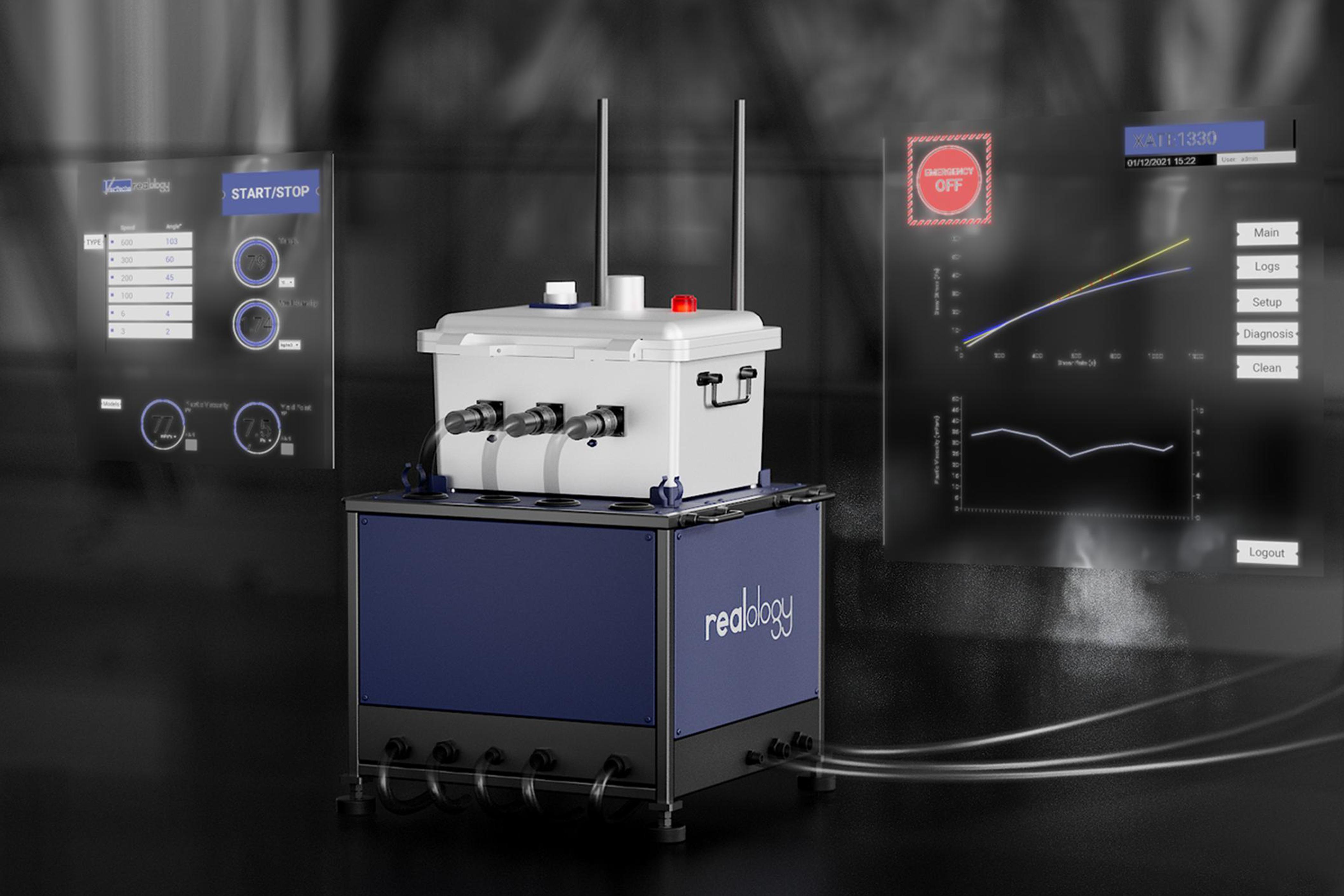
The call of a circular economy has established a fresh category of issues in the field of flow science. The Fluid Rheology of bio-based resins and recycled composites is usually hard to stabilize due to irregular particle sizes and unpredictable molecular weights. State-of-the-art production lines are currently implementing real-time rheometers - gadgets installed directly on the flow line and are able to adjust processing temperatures or pump speeds in real time to counter material variations. This goes on to make sure that when the eco-friendly materials are used, the end product will be indistinguishable to the ones produced using virgin plastics.
About Vertechs
Vertechs boasts of providing high quality fluid solutions in different industries. We are dedicated to innovation which enables us to stream-line complex processes making them reliable and efficient to our partners. We never stop developing our technologies that address the changing needs of the global energy and manufacturing environment, and offer experience that leads to success.
Frequently Asked Questions
1. What is the distinction between viscosity and rheology?
Viscosity is used to determine the resistance of a fluid to flowing at a given point whereas rheology is used to determine how flow is affected by different conditions such as pressure and temperature.
2. What are the reasons why shear-thinning fluids are needed in 3D printing?
The flow of the materials in the nozzle under pressure is facilitated by shear-thinning and then the pressure is withdrawn causing the materials to solidify rapidly.
3. What happens to manufacturing fluids with changing temperatures?
Higher temperature tends to reduce viscosity and this can result in improved flow but can cause problems of sagging or poor adhesion of various layers.
4. What is a yield stress fluid?
It is a liquid that acts as a solid until it is subjected to some force after which it starts to move.
5. Is it possible to predict fluid behavior in real-time using AI?
Yes, the current AI models take sensor data to compensate for the manufacturing variables in real-time in order to achieve uniform quality despite changes in the material properties.
Read Our One More Blog(1): Mastering Well Control: A Comprehensive Guide for Safe and Efficient Operations
Read Our One More Blog(2): What Are Drilling Fluids, Types, Composition And Uses?