
-
Home
-
Products & Services
-
Dissolvable Plugs
 Fast Drill Plugs
Integrated Completion Systems
Dissolvable Cement Retainer
-
Intelligent MPD Manifolds
Intelligent Rotating Control Device
Intelligent All-Electric WBP MPD System
Intelligent Valve Retrofit
-
Intelligent Fluids Monitoring
Real-Time Wellbore Monitoring & Strengthening
Intelligent Drilling Fluids Management
-
Digital Solutions
Smart Wearables
Unconventional Completion & Dissolvable Technology
Featured HighlightsIntelligent Pressure Control Technology
Featured HighlightsIntelligent Fluids Monitoring Technology
Featured Highlights -
-
Vertechs Share
-
News
-
QHSE
-
About Us
-
Contact Us



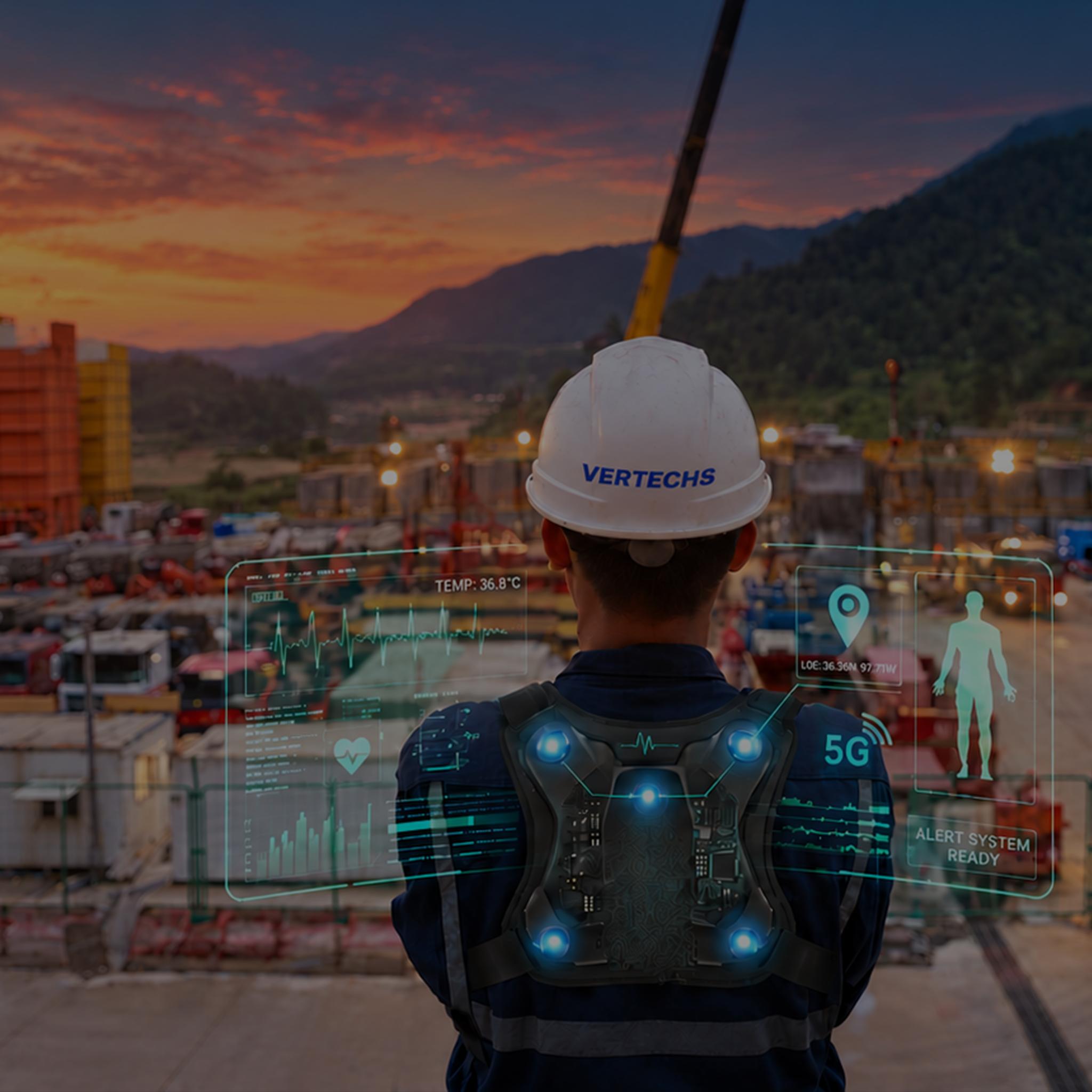
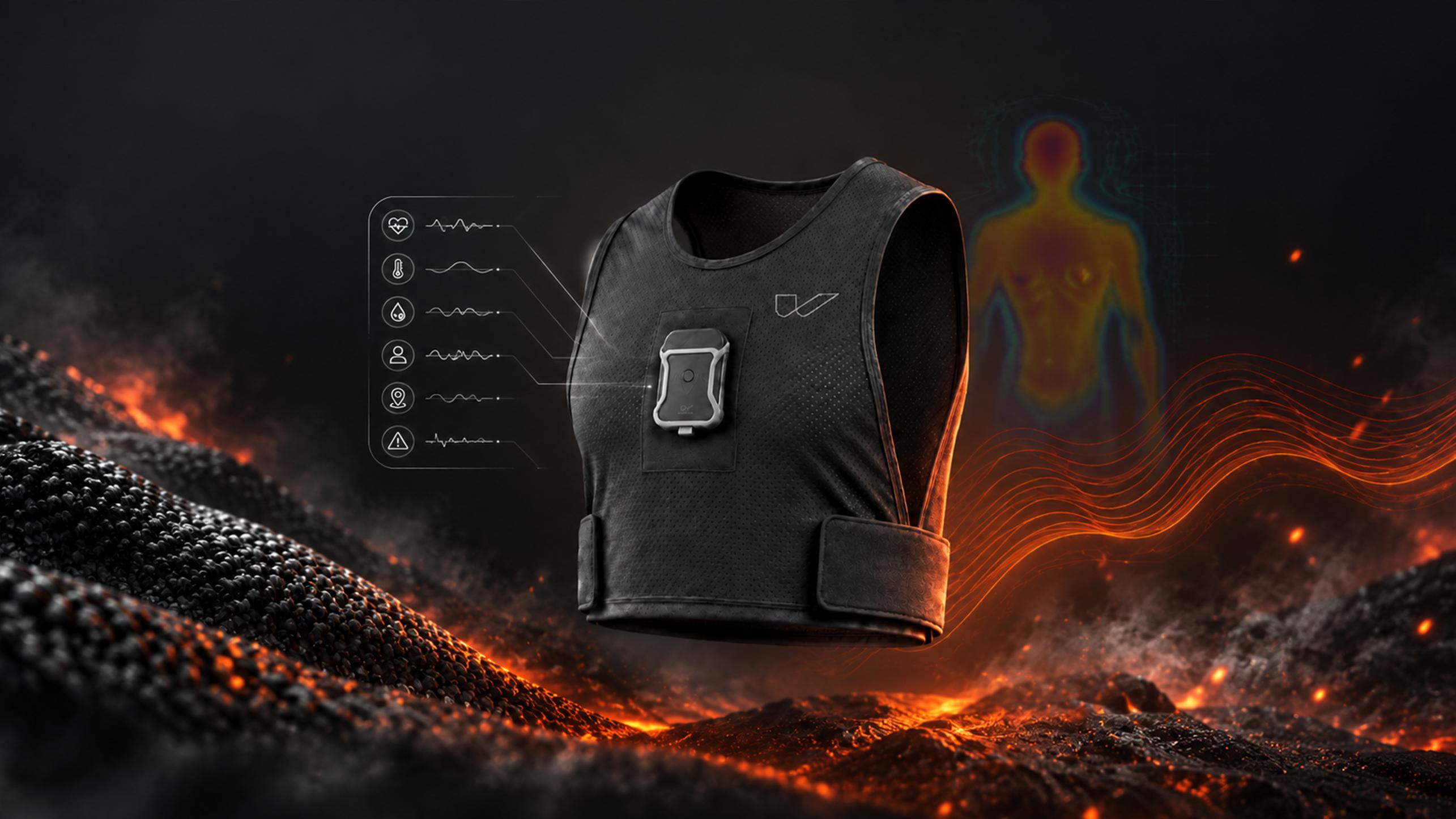
Vertechs Sentinel Wearable Personnel Monitoring combines wearable sensors with a companion software platform. Personnel data, real-time risk alerts, live location tracking, and historical records enable supervisors to identify who needs attention, arrange welfare checks, and coordinate an effective response.
Features
-
Sentinel Wearable Personnel Monitoring integrates wearable sensors with companion software to consolidate personnel monitoring data, alerts, and location tracking in one platform. This enables supervisors to identify critical changes, arrange welfare checks, and review historical trends over time.
-
See more than location: View heart rate, blood oxygen saturation, skin temperature, and posture alongside location data to assess a person's current condition and inform welfare assessments.
-
Receive real-time risk alerts: Readings outside configured thresholds or a detected fall trigger an immediate on‐screen alert. Supervisors can identify the individual, review critical details, and dispatch assistance.
-
Understand what changed: Review readings and recorded routes before and after an alert to identify contributing factors and inform post‐incident debriefs.
Key Performance Parameters
| An adjustable vest secures the removable sensor module to the torso. Heart rate, blood oxygen saturation, skin temperature, posture, and location data are transmitted over 4G to the companion software platform for real‐time supervision and retrospective analysis. | |||
| Wear: Secure the monitoring module | Sense: Measure vital signs and posture | Transmit: Transmit readings over 4G | View: Review status and history |
| Key Performance Parameters | |||
| Protection Rating | IP66 | Dust-tight and protected against powerful water jets; not rated for immersion. | |
| Operating Time | 6 hours | Continuous operating time under typical conditions. Actual duration varies with usage patterns and environmental factors. | |
| Data Transmission | 4G | Data transmitted via 4G mobile network. Verify network coverage at your deployment site before use. | |
| Position Accuracy | ≤ 5 m | Position accuracy in open environments. Buildings and environmental factors may affect performance. | |
| Operating Temperature | -10°C to +60°C | Remove the monitoring module before washing the vest. | |
Application
-
Personnel Oversight For Demanding Roles
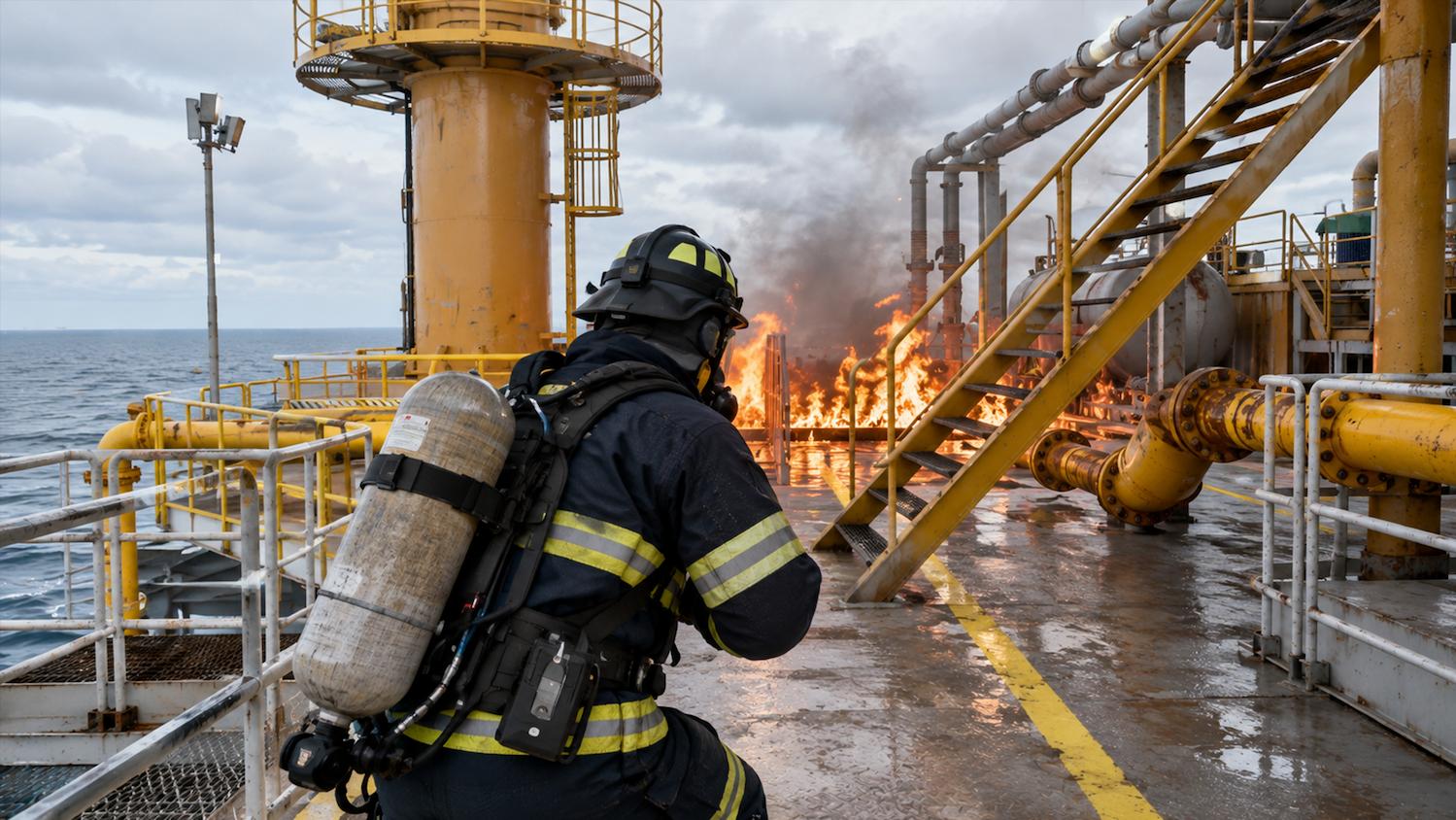
Wearable monitoring and companion software designed for first responders, industrial workers, and military training operations. The system helps supervisors identify personnel requiring attention, coordinate welfare checks, and analyze trends over time.
· First Response: Enhance responder safety and optimize team training through continuous biometric monitoring.
· Industrial: Protect lone workers with real-time health and location monitoring.
· Military Training: Improve training effectiveness and readiness through biometric data analysis.
From Data to Insights
-
Transform Personnel Data Into Actionable Insights
The Sentinel Wearable Personnel Monitoring companion software platform integrates wearable monitoring with operational oversight. View team status, receive real‐time risk alerts, and track live locations in a unified platform. Review historical trends and routes to identify patterns and understand critical changes.
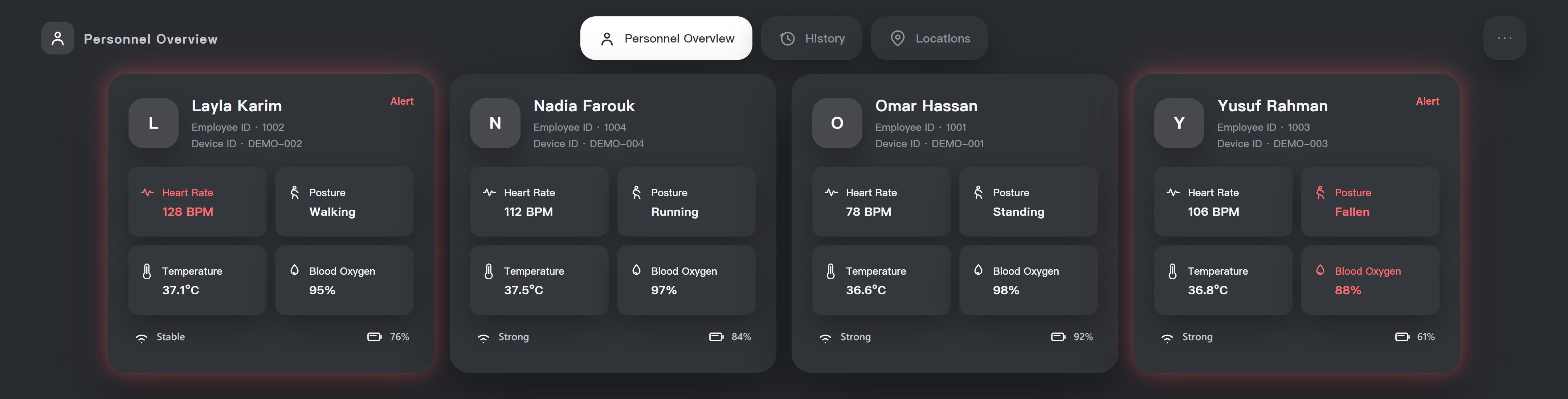
* Interface shown with demonstration data. Live alerts depend on device connectivity and configured thresholds. Monitoring and alerts are subject to network connectivity, correct device wearing, and remaining battery level.
· Team status at a glance: Review the status of people and equipment in a shared dashboard, then access individual profiles to determine who requires immediate attention.
· Location for response: View the affected individual's real‐time location alongside their vital signs to facilitate rapid intervention.
· Real-time risk alerts: Receive immediate on‐screen alerts when readings exceed configured thresholds or a fall event is detected. Access the individual's data to assess the situation and coordinate an appropriate response.
· History for review: Analyze recorded trends and routes to identify how readings changed before and after an alert, supporting comprehensive post‐incident debriefs.


